WELCOME TO MY ePORTFOLIO!
On this website you will find a collection of activities and personal reflections from my journey in the course EDU5286: Technology and Health Professions Education taught by Dr. Catherine Giroux, at the University of Ottawa
I hope you enjoy!

Week 1: Who Am I as an Educator?
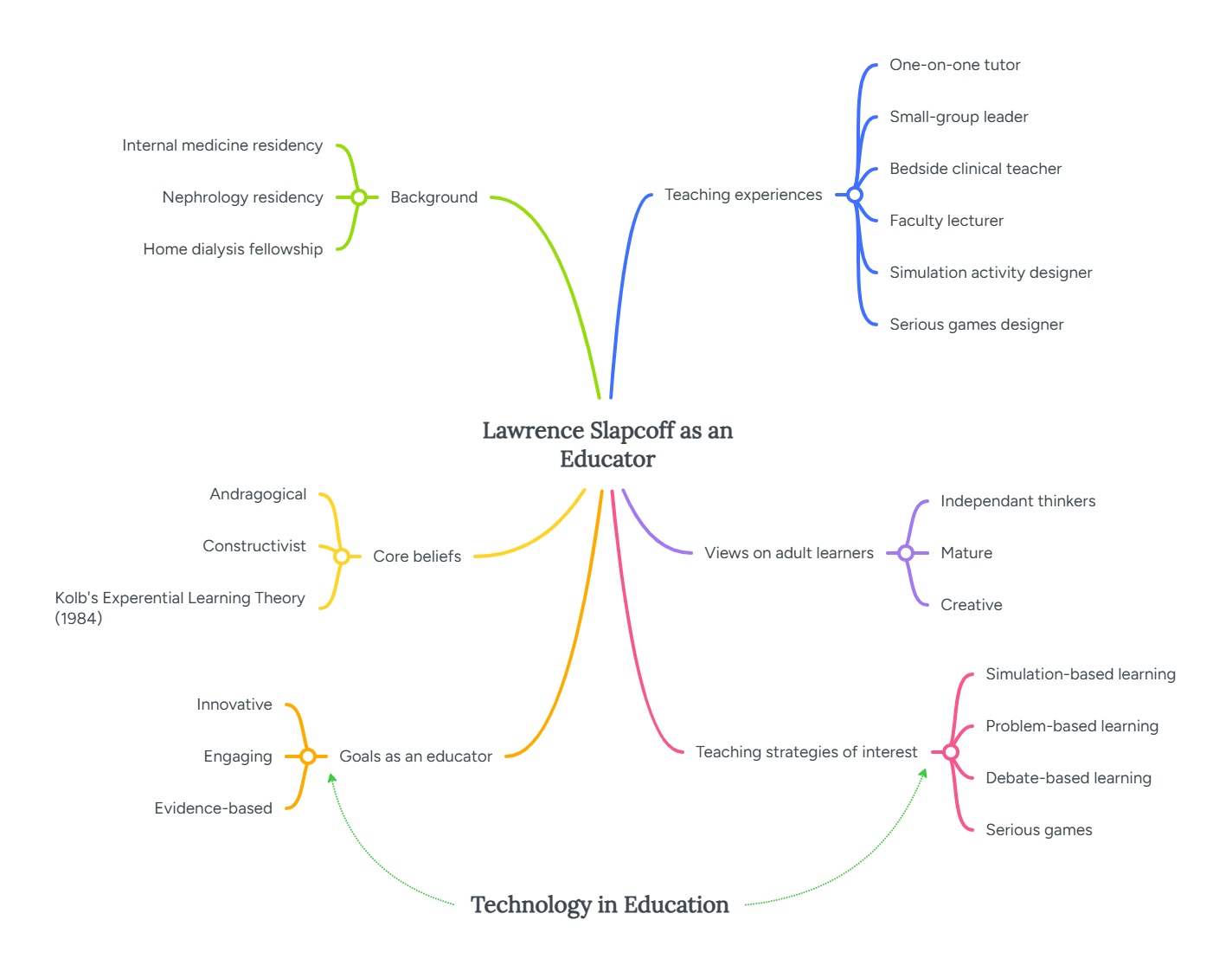
My name is Lawrence Slapcoff, and I am a nephrologist from Montreal, Quebec. I completed medical school and internal medicine and nephrology residencies at McGill University, followed by a home dialysis fellowship at the University of Toronto. I have been very fortunate to return to McGill, where I have been hired as a clinician-teacher. I currently work as a nephrologist at the Jewish General Hospital and hold a position as an Assistant Professor in the Faculty of Medicine. My clinical interests are primarily focused on home dialysis, an area that is highly relevant to my master’s, as the multidisciplinary healthcare team works closely with patients to educate them on how to safely perform their own life-sustaining dialysis treatments in the comfort of their homes.
The prior courses I have taken during my master’s program have helped me craft my identity as an educator and have provided me with the language to articulate my beliefs about teaching and learning. I view myself as an andragogical, constructivist educator who sees learners as independent, mature, and creative thinkers. I aim to instill confidence in learners and allow them to take ownership of their learning. I am highly interested in innovative ways to transform teaching by moving away from traditional lecture-based formats toward more active approaches to learning. I am also a strong believer in experiential learning, grounded in Kolb’s Experiential Learning Theory (1984), which proposes that learning occurs through a cycle of concrete experience, reflective observation, abstract conceptualization, and active experimentation.
I believe that the integration of technology in education aligns very well with these core beliefs, particularly through its potential to facilitate innovative, active, and learner-centred teaching strategies. I am looking forward to learning more about these modalities, particularly during Weeks 7–9 of the course, which focus on simulation, serious games and wearables, and artificial intelligence.
Much of the medical education I have received as a learner has been delivered through traditional lecture-based formats. However, when I have been fortunate enough to participate in innovative teaching sessions using technology, such as serious games or simulation, I have found these experiences to be more memorable and the knowledge gained from them to be retained longer.
Through the completion of this course, I hope to gain deeper insight into the use of technology in education, as well as develop competence in using some of these technologies myself, so that I can become a more innovative, engaging, and effective educator.
During my last semester I became comfortable with using my mind maps to illustrate my ideas and have posted a mind-map in my ePortfolio to illustrate some of the concepts described above.
References:
Kolb, D. A. (1984). Experiential learning: Experience as the source of learning and development. Prentice-Hall.
Week 2: Who are my Learners and what are their Experiences with Technology?
As a nephrologist who teaches at both the undergraduate and postgraduate levels, I encounter learners from various walks of life. Some may be graduates of the medical preparatory program at our university who enter medical school with less life experience at 19 years old (like I did), while others may have completed PhDs or pursued medicine after several years in another career/industry. In this context, I think it is highly important to recognize that my learners are a heterogeneous group who have had very different exposures to technology throughout their lives.
Importantly, I also believe that we should not make assumptions about a learner's attitude toward technology based solely on their age and specifically should not assume that an older learner will be more resistant to using emerging technologies. A study by Staddon (2020), which surveyed 161 university students of various ages, found that mature students (those older than 26) tended to use a narrower range of technologies than younger students but importantly did not differ significantly in their attitudes toward the use of technology. It is therefore important to recognize that while older learners may have been exposed to fewer technologies, they may be equally enthusiastic and open to learning new ones.
I do, however, think that learners' previous experiences may influence which technologies they are most comfortable using. As an example, those who grew up during the rise of social media may be more adept with certain networking platforms such as Facebook or Instagram, while those with a research background may be more familiar with technologies used for academic purposes like Endnote. I therefore expect learners to enter educational encounters with diverse backgrounds and varying levels of exposure to educational technology. This is also likely dependent on their previous training, as some institutions may incorporate technology and creative approaches to teaching more extensively than others. Regardless of previous exposures, I expect most learners to arrive with a strong understanding of basic software such as Microsoft Office, the use of search engines such as Google, the ability to recognize spam, and an understanding of which websites are safe and trustworthy.
With respect to developing digital literacy in our learners, I believe as educators we should focus on two main priorities. The first is teaching learners how to perform proper, safe, and accurate searches for medical/academic information. As described in this week's Big Ideas post, there is a near-infinite amount of information available online. It is therefore crucial that learners can "see the forest through the trees" and identify which information is important and trustworthy. As a medical student, I still remember the PubMed classes where members of the university library team would teach us how to search medical literature through supervised modules on MeSH searches. I use the skills learned during those sessions on a near daily basis in my day-to-day life as a physician.
The second priority is teaching learners how to critically interpret the information they find and appropriately apply it to clinical practice. This has become particularly important with the increasing availability of artificial intelligence. Technologies such as Open Evidence and UpToDate AI can be outstanding tools, but only when used appropriately. Learners need to understand that these technologies should be used as an adjunct to, rather than a replacement for critical thinking. Instead of simply accepting an AI-generated response as the answer, we should teach learners to examine the sources underlying the response by reading the original articles to determine whether the evidence actually supports the claims being made.
Finally, one point that is not captured by the discussion above, but that I think is worth emphasizing, is that learning about technology should not be unidirectional. As instructors, we also need to remain open to learning from our students. Many of our learners have grown up with these technologies, have been exposed to different tools during previous courses, or have experimented with technologies that we may not yet have encountered ourselves. Therefore, I believe our role as educators is also to demonstrate our own willingness to adapt, remain curious, and learn from our students just as they learn from us.
References:
Staddon, R. V. (2020). Bringing technology to the mature classroom: age differences in use and attitudes. International Journal of Educational Technology in Higher Education, 17(1), 11.
Week 3: My Journey using Reddit to Better Understand my Patient’s Needs
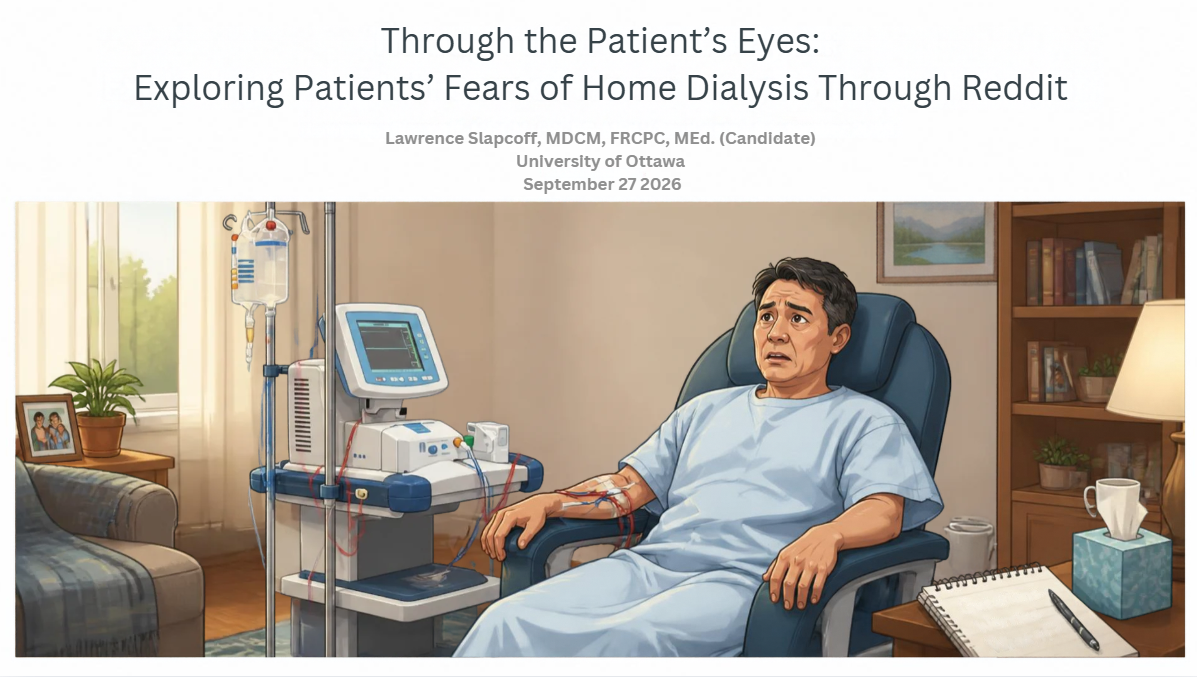
This week’s reading inspired me to think more about the patient experience in home dialysis and how patients support each other in this fascinating field of medicine, where patients are responsible for completing their own life-saving treatments in the comfort of their homes.
I think that compared with in-centre hemodialysis, where patients gather in the same location for treatment, home dialysis can sometimes be isolating, as this regular peer-to-peer contact is no longer present.
In keeping with the technology theme of this course, I took to Reddit to better understand the types of support that exist between home dialysis patients and what they struggle with most. Specifically, my learning objective was that by the end of this assignment, through exploring Reddit, I wanted to be able to identify three specific areas of concern that home dialysis patients have regarding this type of treatment.
In keeping with the technology theme of this course, I created my first Canva presentation, which is attached below and illustrates what I learned during the activity, summarizes my journey and highlights what new information I acquired to help me reach my learning objective. Please find the link below!
https://canva.link/ywk022mr3m7nasi
Lastly, this week’s reading reminded me of an interesting article by Trinh et al. (2024), which aimed to identify areas of concern among home dialysis patients by connecting directly with patients and then identifying potential strategies to address these concerns.
References:
Trinh, E., Manera, K., Scholes-Robertson, N., & Shen, J. I. (2024). The burden of home dialysis: an overlooked challenge. Clinical Journal of the American Society of Nephrology: CJASN, 19(9), 1191.
Week 4: Use of Video and its Impact on the Formal, Informal and Hidden Curricula
I found vlogging to be an interesting experience and one that, while I see its educational value, I did not necessarily enjoy. I am someone who does not love spending too much time in front of the camera. Therefore, this activity did push me outside of my comfort zone, which I do think is a good thing.
The technology was relatively easy to use, as I recorded a video with laptop, something that I have done before and that did not require any learning curve.
I think the technology was right for the job, as it allowed me to express my views in a way that, by hearing the tone of my voice, the audience could gain a more nuanced understanding of what I was trying to convey compared to text-based blogging.
I believe that this type of intervention supports learner engagement by stimulating learners in both an auditory and visual manner. I think there is a personal quality to teaching that is not captured when you cannot hear or see your teacher.
I also think that teaching through vlogging can be more engaging (perhaps this is why influencers, who rely on engagement for their livelihood, use it!). In particular, I think it appeals to learners who enjoy engaging with audiovisual content.
In my case, I do believe that the technology supported the intended purpose of the activity, as I was able to effectively convey my responses to the questions asked.
While these are all benefits of this technology, I will say that the process of creating the content and perfecting the video was a challenge. Unlike a traditional text-based presentation, if I said something I did not like, I could not simply highlight and delete it. Rather, I had to either try to edit that specific part or start over, as I found that my attempts at editing looked unnatural. In fact, what you saw was take 11! Also, as described above, I am somewhat camera-shy, and therefore watching myself over and over was somewhat painful. Lastly, I had to account for background distractions, such as cars honking and doorbells ringing, which were out of my control!
Ultimately, I am grateful that I had the opportunity to create my first vlog through this activity. While I definitely see the benefits of this technology, it is not one that I think I will regularly incorporate into my teaching repertoire. I will say that this activity did give me a new level of respect for social media influencers!
Video References:
Edwards, R. (2015). Software and the hidden curriculum in digital education. Pedagogy, Culture & Society, 23(2), 265–279.
Gofton, W., & Regehr, G. (2006). What we don’t know we are teaching: Unveiling the hidden curriculum. Clinical Orthopaedics and Related Research, 449, 20–27.
Hafferty, F. W. (1998). Beyond curriculum reform: Confronting medicine’s hidden curriculum. Academic Medicine, 73(4), 403–407.
Jackson, P. W. (1968). Life in classrooms. Holt, Rinehart & Winston.
Week 5: mLearning
For this week’s activity, I decided to evaluate the app Figure 1 using my iPhone. This is a free app that can be downloaded from the App Store. It describes itself as a platform for healthcare professionals (HCPs) to share and discuss real-world clinical cases (Figure 1, n.d.). When signing up, users are asked to verify that they are HCPs. The platform incorporates images, text, quizzes, surveys, and discussion forums. From my observations, I found that the app served three main purposes: (1) an educational platform where HCPs shared clinical vignettes, cases, and quizzes (2) an opportunity to seek help, where HCPs shared challenging cases and asked for expert opinions (3) a support network where HCPs discussed more sensitive topics, such as mental health and difficult medicolegal issues they were facing.
I started by customizing my filters to reflect my areas of practice, selecting “Nephrology,” “Internal Medicine,” and “Advanced Dialysis.” I then expanded my filters to include areas in which I wish to improve my knowledge, such as “Dermatology” and “Infectious Diseases.” I spent some time browsing the content by completing various quizzes and clinical vignettes.
Using this app made me reflect on the article by Wenger-Trayner and Wenger-Trayner (2015) discussing communities of practice. I truly felt that this app provided a space for a community of practice, where HCPs with a shared interest in medicine could share their expertise, discuss challenging cases, and learn from one another in a safe and non-judgmental environment.
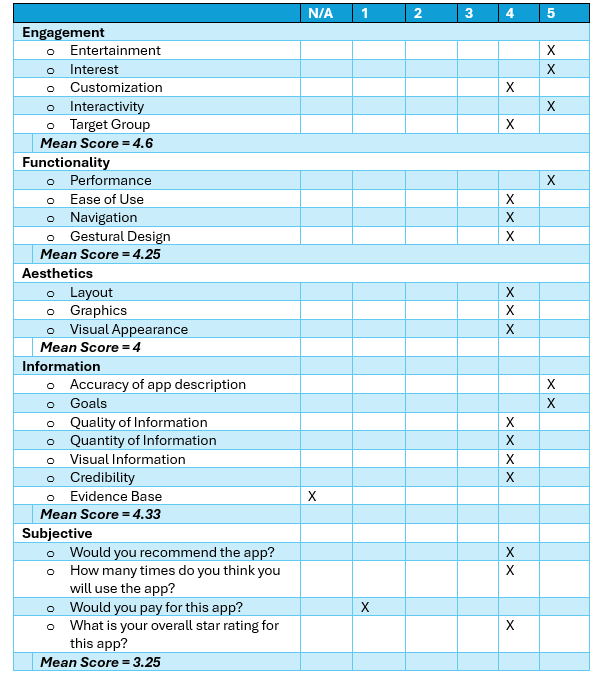
To more formally evaluate the app, I used the Mobile App Rating Scale (MARS), specifically the 23-item assessment tool available in Multimedia Appendix 2 of Stoyanov et al.’s (2015) article. The full assessment is shown on the next page; however, below is a summary of my mean scores for each category and the rationale behind my ratings.
1. Engagement: Mean score = 4.6/5
I found the app fun, entertaining, and interesting to use, although I do not envision myself spending more than 10 minutes on it at a time. While there were some customization options in terms of the filters available, I found that these topics were quite broad. I also had to enable cookies to use this feature, which I would have preferred not to do given the implications for data privacy. I found the app quite interactive, although I would have appreciated more audio/video content, as much of the content was text-based and was far less catchy than for examples, reels on Instagram. I felt that the app was well suited to its target audience of HCPs, although much of the content seemed to be geared towards physicians (this however, may have been a reflection of my own filter settings).
2. Functionality: Mean score = 4.25/5
The app was very easy to set up, and it took me less than five minutes to learn how to use it. I do wish, however, that the topics were less broad. For example, rather than searching through content broadly categorized under nephrology or internal medicine, I would have appreciated the ability to search for more specific topics, such as glomerulonephritis. Otherwise, the app was easy to navigate, and most of its features were quite intuitive.
3. Aesthetics: Mean score = 4/5
The layout was quite simple, and what I particularly enjoyed was that the screen was not overcrowded with too many items at once. The graphics were of moderate to high quality, although this was largely dependent on the individual posting the content and the images they chose to share. The colour scheme was reasonable, although I think the app could benefit from slightly brighter colours to make it more visually appealing.
4. Information quality: Mean score = 4.33/5
The information provided in the app seemed reasonable and generally consistent with my medical knowledge. I particularly appreciated being able to see who had posted the content and what their credentials were. I did notice, however, that many of the cases and clinical vignettes relied on expert opinion rather than referencing higher levels of evidence to support their conclusions. I also worry that the authors of the quizzes can designate the correct answer, which may not always reflect the nuances of clinical diagnosis and management. I think users need to remain critical of the information they are consuming and verify it when necessary.
Another concern I had was regarding patient confidentiality. Although I did not come across any images containing patients’ faces or obvious identifiers, there were various images of patients’ bodies, which made me wonder whether appropriate consent had been obtained to share these photographs.
5. Subjective quality: Mean score = 3.25/5
The main reason my subjective score was relatively low was that I would not pay for this app. Although I enjoyed using it, would absolutely recommend it to colleagues, and would personally give it a four-star rating, there are so many freely available educational resources in medicine that I would have difficulty justifying paying for it. That being said, I do envision myself continuing to use this app, and it could definitely replace some of my “doomscrolling” on Instagram!
Overall, this was an excellent opportunity to experiment with an educational app that I found highly engaging and that I envision myself continuing to use, as long as it does not go behind a paywall!
References
Figure 1. (n.d.). Medical collaboration on real patient cases. https://www.figure1.com/
Stoyanov, S. R., Hides, L., Kavanagh, D. J., Zelenko, O., Tjondronegoro, D., & Mani, M. (2015). Mobile app rating scale: a new tool for assessing the quality of health mobile apps. JMIR mHealth and uHealth, 3(1), e3422.
Wenger-Trayner, E., & Wenger-Trayner, B. (2015, June). An introduction to communities of practice: A brief overview of the concept and its uses. Wenger-Trayner. https://wenger-trayner.com/introduction-to-communities-of-practice/
Figure 1. MARS Rating Scale
Week 6: Learning from Social Media
For this activity, I selected Instagram as my social media platform and #KidneyHealth as my search strategy. As a nephrologist, I thought this would be a creative opportunity to see things through the eyes of my patients and explore what they may be researching on their own.
This search strategy revealed 28 profiles and 750 reels. It also generated an AI summary on kidney health that included epidemiological data from the United States using CDC data, an explanation of the kidneys' function in layman's terms, and general health information. The AI also generated a reference list of four resources, one of which I would deem credible (the CDC), two of which were YouTube videos, and one from a general health website called “Ilivactive.com,” which appears to be a holistic health website. While I agreed with the information in this summary, which described the kidneys' role as a filter in the body, provided reasonable general health advice (drinking enough water, avoiding salty foods and non-steroidal anti-inflammatories), and explained when to seek medical attention, I would not consider the latter three resources to be clearly evidence-based, nor are they resources I would personally refer my patients to.
Next, I decided to review the first 50 reels to identify who was making these videos using this hashtag and what information was being provided. I recorded data to answer four questions:
1. Who is sharing the information?
2. What information is being shared?
3. Is the information credible?
4. How is the information being shared?
Please see the graphs provided below.
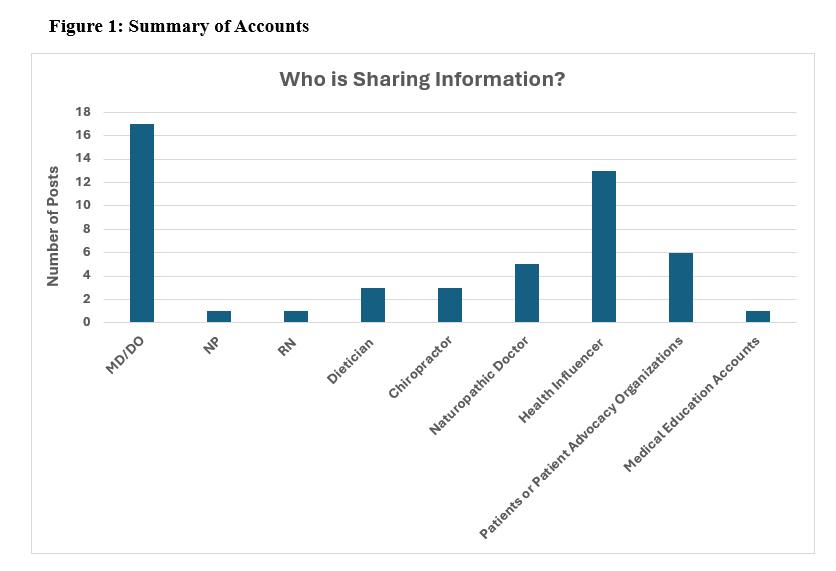
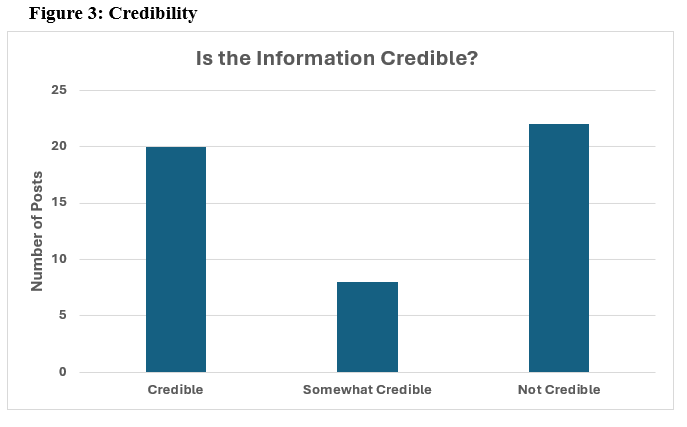
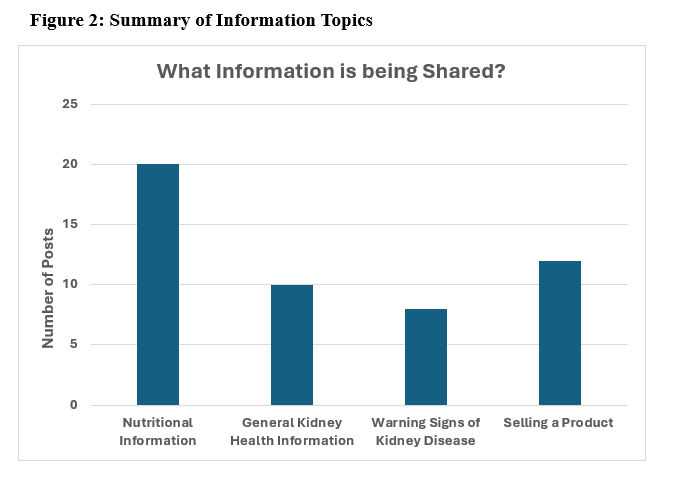
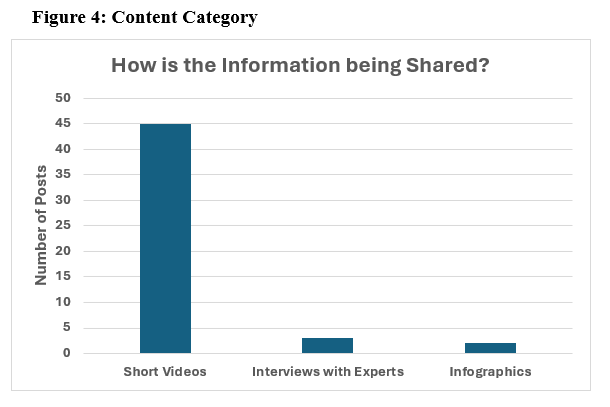
As illustrated in the figures above, which reflect a limited sample size of 50 posts, I identified that MDs/DOs were the most frequent posters using this hashtag, followed by health influencers and patients or patient advocacy organizations. Much of the information (40%) was nutrition-based; however, a concerning proportion of posts (24%) were selling products that, in my opinion, had little scientific backing. I found that 40% of the information was credible, 16% was somewhat credible, and the remainder was not trustworthy. Most of the posts were short educational videos.
The majority of the credible information came from accounts belonging to healthcare professionals (MDs/DOs, RNs, NPs, RDs), although there were some alarming posts from individuals with professional designations who were selling products in a manner that I felt absolutely crossed the boundaries of professionalism. The information from credible sources frequently cited expert opinion and occasionally presented results from evidence-based literature. The non-credible information was primarily nutrition-focused, with very little reasonable scientific explanation provided. Even when manuscripts were cited, the results were often interpreted incorrectly (such as presenting statistically insignificant findings as absolute truths). In one instance, I found a health influencer advocating for the exact opposite of what we tell our kidney stone patients by promoting a vitamin C supplement that can actually contribute to stone formation!
While I do see the potential for building online communities of practice, I am not sure there are enough accounts sharing high-quality, evidence-based information under this hashtag at this time to create a strong community. I did learn one or two new points about nephrology from these videos, but it took over an hour of sorting through largely non-credible information to get there. As such, I do not see this as an efficient source of continuing professional development at this time.
Week 7: Experimenting with Online Simulation
For this activity, I used the Full Code medical simulation platform (Full Code Medical, n.d.). I completed the tutorial involving a patient with a lumbar fracture, followed by two simulations involving a woman with acute coronary syndrome and a teenager with a migraine without aura. I actually had a lot of fun completing these simulations! The gamification aspect kept me engaged, as I was eager to see what would happen next and how I would score. At times, it felt more like playing a video game than completing a clinical simulation.
I think this is an excellent educational resource, particularly for junior medical trainees. It provides them with an opportunity to practice managing high-stakes clinical situations in a realistic environment, where they can make errors without compromising patient safety. As a former internal medicine resident, I was tasked with leading code blues very early in my training. I sometimes found myself leading a code in a situation that I had never previously encountered, even during our simulation sessions. This added a significant amount of anxiety to my night shifts, and I could have absolutely benefited from these online exercises to better prepare myself.
I would consider this a high-fidelity simulation, given the attention to detail and realistic nature of the cases, despite the limitations of a screen-based platform. I particularly appreciated:
The interesting clinical cases and evidence-based teaching points.
The individualized feedback highlighting what I did well and where I could improve.
The delay in receiving investigation results, which added to the realism of the simulation.
The ability to take a history using an AI chatbot rather than simply selecting predetermined questions.
The opportunity to earn continuing medical education credits, which I actually took advantage of!
My main criticism was that the interface was somewhat intimidating at first, given the number of buttons, although the learning curve was not too steep. I also would have preferred to communicate verbally with the patient to further simulate a real clinical encounter. Although the platform indicated that I could use my device's dictation software, I could not get this to work (possibly my own fault!).
This activity also made me wonder how this technology could eventually be incorporated into high-stakes summative assessments, such as the Royal College examinations. During my own examinations, I was presented with clinical scenarios and asked to describe how I would manage them while a group of evaluators observed me through a computer screen. I can envision a future where this technology, potentially combined with virtual reality, allows examinees to actually work through these cases in real time rather than simply describing what they would do. If appropriately standardized and validated, it could also reduce the considerable resources required to administer these examinations.
This activity reminded me of a paper I recently read in the Clinical Journal of the American Society of Nephrology by Russ et al. (2025). The authors developed an immersive virtual reality simulation in which learners assess and manage a patient presenting with ANCA-associated vasculitis. The incorporation of virtual reality and haptic feedback takes the simulation experience a step further. I would recommend this article as a supplementary reading for this week's topic.
Overall, I found Full Code to be an excellent example of how technology can actively engage learners while allowing them to practice high-stakes situations in a low-stakes environment with tailored feedback. I plan to recommend this resource to my trainees.
References
Full Code Medical. (n.d.). Full Code medical simulation. https://fullcodemedical.com/
Russ, P., Morgenschweis, M., Einloft, J., Meyer, H. L., Bedenbender, S., Wenzel, L. T., Hirsch, M. C., Ganser, A., Bonventre, J. V., & Grgic, I. (2025). Novel immersive emergency training module to enhance clinical competency in nephrology. Clinical Journal of the American Society of Nephrology, 20(10), 1396–1406.
Week 8: Using the TPACK Framework to Design a Kahoot! Educational Competition
For this week’s activity, I was inspired by an interesting conundrum I had recently come across as a member of the Canadian Society of Nephrology Annual General Meeting Pre-Course Planning Committee. The purpose of this committee is to plan a two-day educational course for nephrology fellows across Canada to learn about interesting and unique nephrology topics. Over the past two years, one speaker consistently scored far above the rest, and we were asking ourselves why. His topic (electrolytes) was not necessarily the most exciting or unique and had been presented in previous years with lower scores. What he did differently, however, was that rather than using didactic lectures (the primary mode of instruction in this course), he hosted an hour-long Kahoot! competition. This led us to question why he received such high scores. Was it his pedagogical approach, the content, the technology, or a combination of these elements? This conversation directly relates to the TPACK framework (Mishra & Koehler, 2006) and inspired me to take on the challenge of creating my own Kahoot! activity on a different topic.
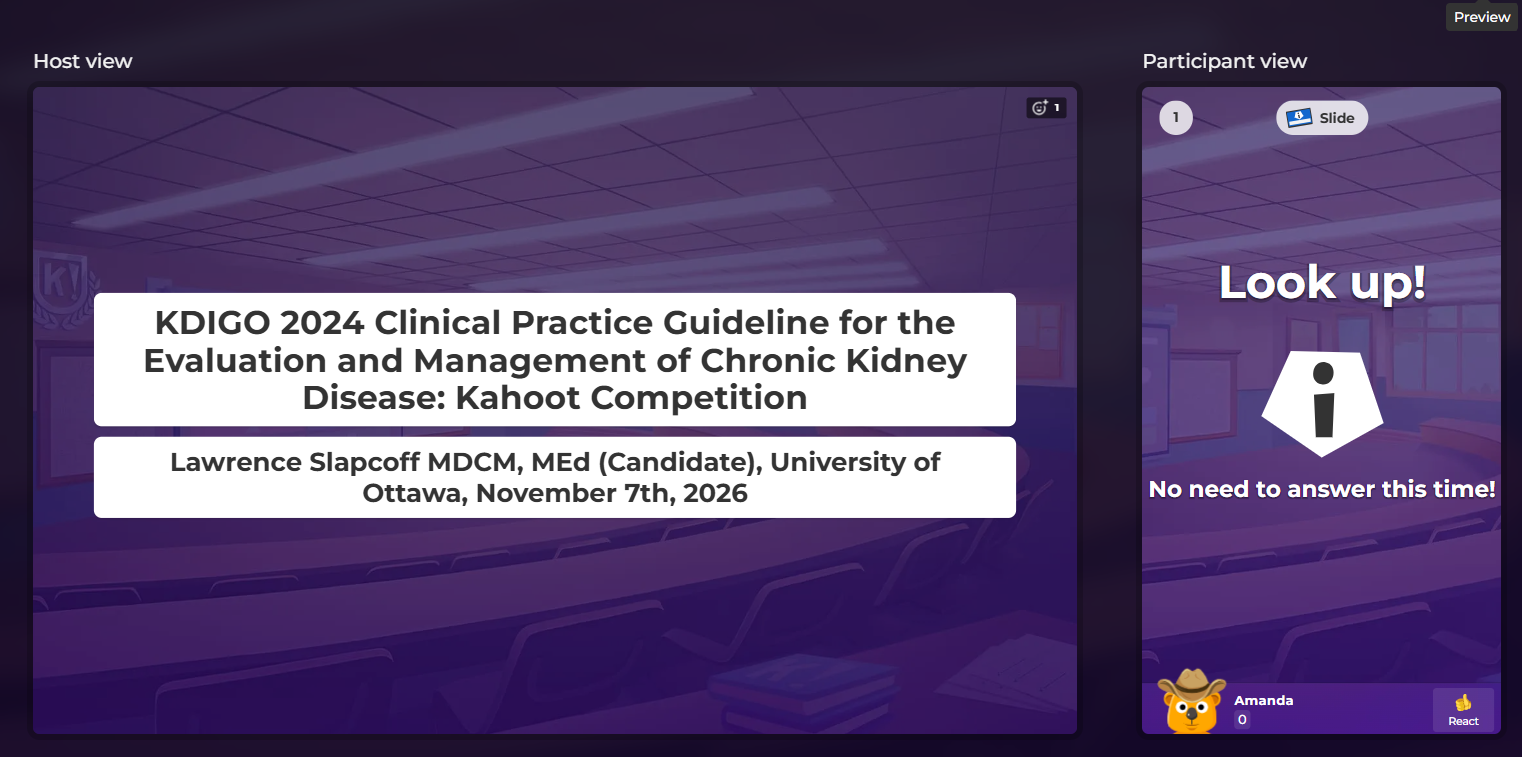
For this week’s activity, I created an interactive Kahoot! game intended for PGY-4 and PGY-5 nephrology fellows, although it could also be used with internal medicine residents, family medicine residents, or nurses interested in nephrology. The topic I chose was the KDIGO 2024 chronic kidney disease (CKD) guideline (KDIGO CKD Work Group, 2024), which provides important suggestions and recommendations on the evaluation and management of CKD but, in my experience, can be somewhat daunting to read given that it is nearly 200 pages long. I therefore decided to take what I felt were some of the most important recommendations from this guideline and present them to trainees in a more engaging and interactive way.
Please find my activity here! https://create.kahoot.it/share/kdigo-2024-ckd-guideline-competition/34b07830-b474-4926-b985-4d250b0eeb45
I recommend using the “play solo tab” on the right side of the page to experiment with the activity yourself!
Using the questions from Dr. Giroux’s prompt and in keeping with the TPACK framework (Mishra, P., & Koehler, 2006), my reflection is as follows:
Technological knowledge: I think Kahoot! is a great platform for hosting interactive teaching sessions that incorporate an element of competition, which may encourage participation. It allows learners to actively participate in a teaching session that differs from traditional lectures, while also allowing educators to incorporate audio and visual content. I decided to use the quiz mode, where learners compete against one another to achieve the highest score. I felt that this would instill a sense of competition and, in turn, encourage engagement. It does require a baseline level of basic technological proficiency in terms of being able to read prompts and select the answer on your screen. It also requires users to possess either a smartphone or computer.
Content knowledge: I started by deciding on my intended learning outcome and worked backwards to design the activity. The content I chose was based on areas where I have personally observed knowledge gaps among trainees, recommendations that I felt had the greatest impact on patient care, recommendations that were new to this guideline, and those that have generated controversy since its publication.
Pedagogical knowledge: I decided to teach this content primarily using a multiple-choice question approach. However, I felt that simply providing the correct answer would not be sufficient. I therefore followed each question with either the relevant statement from the guideline or an infographic that reinforced the intended learning point. When delivering this activity, I would provide an explanation for each answer while displaying the corresponding text or figure. I felt that this was important to ensure that the activity was not simply a competition but also a meaningful learning experience.
I have thoroughly enjoyed the Kahoot! style teaching activities that I have been exposed to throughout my training and hope to share similar experiences with my own trainees. I found the process of creating the activity relatively user-friendly, although there are some limitations to the platform. In terms of benefits, I find that adding an element of competition to teaching can significantly increase engagement (especially if there is a reward at the end!). I also found the platform easy to learn and appreciated the ability to incorporate text, images, and videos. There are also AI tools, which I chose not to use for this assignment, but I can see how they could accelerate the process of creating these activities.
My biggest qualm with the platform is the character limit for each question. Although this forces educators to be succinct, which is not necessarily a bad thing, it can sometimes be difficult to properly explain the nuances of a clinical question with these limits.
In my own educational practice, I envision using this type of teaching not necessarily for scheduled academic half-days, which are typically two-hour blocks intended to prepare residents for their examinations, but rather for shorter, interactive teaching sessions. For instance, I could see myself using Kahoot! when I am on service and giving a 30-minute teaching session on a specific topic or when covering the clinical teaching unit with a large team of trainees.
References
Kidney Disease: Improving Global Outcomes (KDIGO) CKD Work Group. (2024). KDIGO 2024 clinical practice guideline for the evaluation and management of chronic kidney disease. Kidney International, 105(4S), S117–S314.
Mishra, P., & Koehler, M. J. (2006). Technological pedagogical content knowledge: A framework for teacher knowledge. Teachers College Record, 108(6), 1017–1054.
Week 9: AI and Wearables
My task for this week’s activity was to create a blog post discussing the impact of both artificial intelligence (AI) and wearable technology in healthcare and health professions education (HPE). I have decided to separate this into sections (1. AI, 2. Wearables) in the blog post below:
Part 1: Artificial Intelligence
“Those who ignore AI will have temporary comfort, but, when they finally realise that it is all around them, they will wonder how they missed it” (Masters, 2019).
This quote from this week’s reading encapsulates a strong sentiment I have towards AI. Whether we like it or not, AI is here, its use is becoming increasingly widespread, and not learning to use it will likely result in us falling behind. While I was quite young during the rise of personal computers and companies such as Apple and Microsoft, I wonder if this technological advancement was met with the same skepticism.
In my opinion, the use of AI in healthcare is a true game changer and will forever alter the way we practice medicine. As described in this review by Alowais et al. (2023), there are numerous ways AI can be incorporated into clinical practice, including disease diagnosis, treatment recommendations, personalized medicine and patient education.
I recently attended a seminar on AI at the National Kidney Foundation Spring Clinical Meetings and left astonished by how some physicians are already incorporating AI into their practice. Examples included streamlining workflow by sorting through emails and prioritizing those of greatest importance, drafting responses to patients’ clinical questions through patient portals, and comparing individual patient characteristics (e.g., age, sex, eGFR and albuminuria) against the inclusion criteria of published clinical trials to identify medications from which patients may benefit, such as sodium-glucose cotransporter-2 inhibitors, mineralocorticoid receptor antagonists, angiotensin-converting enzyme inhibitors and glucagon-like peptide-1 receptor agonists which are current pillars of chronic kidney disease pharmacotherapy. In my own practice, I primarily use AI through OpenEvidence as a powerful search engine for medical literature. I also occasionally use this webpage to create educational handouts for patients on which foods to avoid or to design sheets for them to track their blood pressure at home.
Overall, I think AI has the potential to create a more efficient healthcare system where more patients can be seen, less time is spent on documentation, and more evidence-based care is provided.
Despite these benefits, there are also significant challenges with AI and I think all users must be cognizant of these limitations. AI can hallucinate information and provide misleading search results, which could ultimately lead to patient harm. Another concern I have is the handling of personal health information. In healthcare, patient information is typically protected within electronic medical records, and healthcare professionals receive specific training on how to prevent privacy breaches. I have personally seen people copy and paste clinical notes into AI platforms to make them more concise or use AI to draft emails containing confidential patient information. I worry that, without proper education, users may not fully appreciate the privacy implications of entering this information into platforms that are not approved for clinical use.
While I see tremendous benefits of AI in patient care, I am somewhat more skeptical about its role in HPE. Although AI can facilitate learning through personalized feedback and easier access to information (Masters, 2019), I worry that medical trainees may become too reliant on this technology and that this may hinder their development. I wonder if this will become more pronounced over time, as each incoming cohort of medical students will have been exposed to AI earlier in their lives. Even seemingly simple tasks, such as drafting an email or writing a reflection, may become daunting for the next generation if they have always relied on AI to perform them. How will this impact their ability to think critically, be creative and independently solve problems? I also wonder how this will impact the development of research skills, given how easy it has become to ask AI to draft a manuscript once provided with the data.
I think an important hidden curriculum consideration is the balance that healthcare professionals and trainees will need to find. As medical educators, we must be mindful that how we use AI in our own practice will influence how our trainees use it. While we must accept that without using AI we may fall behind, excessive reliance on it may negatively impact our own ability to function and develop. This will ultimately impact providers and patients alike, as we want efficient, evidence-based healthcare professionals using state-of-the-art technology, who can also think critically, be creative and recognize the limitations of the technology they are using.
Part 2: Wearables
I personally have had limited experience with wearable technology. As described in this week’s reading by Sultan (2015), there are several potential applications in healthcare, including monitoring vital signs and glucose levels, remotely accessing patient information and facilitating medical education.
The biggest benefit I have personally seen has been with continuous glucose monitoring devices, which have drastically changed the way patients with diabetes are managed. These devices have allowed us to move beyond relying primarily on HbA1c to incorporating more detailed measures of glycemic control, such as time in range. Another example is the Apple Watch’s ability to detect potential episodes of atrial fibrillation, which I have used in my own practice to help guide further investigations and decisions surrounding anticoagulation.
With regards to HPE, this topic reminded me of the article by Taplay et al. (2021) from earlier in the course, in which GoPro cameras were used during simulation to allow nursing students to reflect on the care they provided from the patient’s perspective. I wonder whether we could ethically incorporate similar wearable technology into the actual hospital setting to facilitate reflection on real patient encounters. One limitation acknowledged by the authors in the study was the potential for the Hawthorne effect, whereby participants alter their behaviour because they know they are being observed. While this would remain a challenge in the clinical setting, I think using it in real-life would lead to more accurate results.
I think one of the main challenges of wearable technology is its widespread adoption. As discussed by Sultan (2015), cost, appearance and social acceptability are all important considerations. The simple fact that individuals have to physically wear these devices may be a barrier, particularly if they are bulky, unfashionable or inconvenient. I suspect that the smaller, more discreet and more affordable these devices become, the more likely they are to be adopted.
From a hidden curriculum perspective, I worry that as healthcare professionals increasingly rely on wearable devices to obtain clinical information, we may inadvertently teach our trainees to place greater value on technology than on their own clinical assessments. Additionally, we must be careful not to develop a healthcare system that disadvantages patients who cannot afford or are uncomfortable using these devices.
Overall, I see both technologies as integral parts of the future of healthcare and HPE, although I personally think AI will have the greater impact. We must recognize their benefits but also their limitations and never forget how to function without them! There is still so much value in being able to take a good history and perform a thorough physical examination without all the technological accessories available to us today.
References
Alowais, S. A., Alghamdi, S. S., Alsuhebany, N., Alqahtani, T., Alshaya, A. I., Almohareb, S. N., Aldairem, A., Alrashed, M., Bin Saleh, K., Badreldin, H. A., Al Yami, M. S., Al Harbi, S., & Albekairy, A. M. (2023). Revolutionizing healthcare: The role of artificial intelligence in clinical practice. BMC Medical Education, 23, Article 689
Masters, K. (2019). Artificial intelligence in medical education. Medical Teacher, 41(9), 976–980.
Sultan, N. (2015). Reflective thoughts on the potential and challenges of wearable technology for healthcare provision and medical education. International Journal of Information Management, 35(5), 521–526.
Taplay, K., O’Keefe-McCarthy, S., Tyrer, K., Mills, T., & MacNaught, A. (2021). Simulation and a GoPro® camera: Changing student nurses’ perspectives of patient-centred reflection. Clinical Simulation in Nursing, 59, 17–22.
Week 10: Visual Abstract
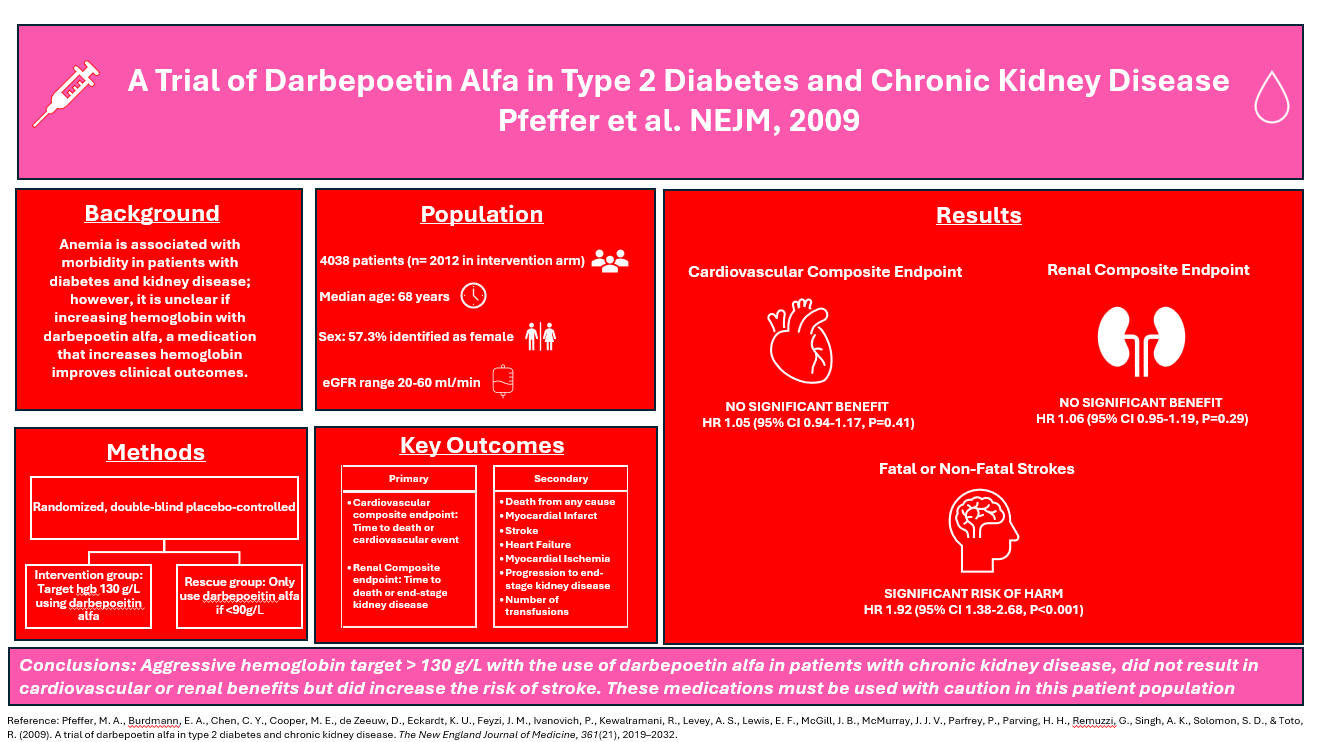
Since starting my medical studies, I have been an admirer of visual abstracts. I find that they capture the essence of a study and present the information in a way that, for someone like myself who identifies as a primarily visual learner, is easy to digest and allows me to quickly understand the main takeaways. In particular, I have always appreciated the visual abstracts produced by NephJC (https://www.nephjc.com), an online nephrology education platform. I have often incorporated these visual abstracts into journal clubs instead of a traditional summary slide and have received good feedback. However, until this assignment, I had never created one myself.
For this assignment, I wanted to continue my general theme of basing my assignments on nephrology topics in the hopes that I can reuse these educational resources with my own trainees. Given that many visual abstracts are created for newly published studies, I instead wanted to focus on an older study that is sometimes forgotten but has fundamentally changed the way we practice nephrology. I therefore chose the TREAT trial (Pfeffer et al., 2009), a landmark study that evaluated the use of darbepoetin alfa in patients with chronic kidney disease, yielded unexpected results and changed our approach to anemia management in this patient population.
Throughout my residency, fellowship and now as a staff physician, I have been fortunate to present my research at several conferences through poster presentations. I find the preparation of these posters quite different than the visual abstract I created here. When creating traditional research posters, I typically try to incorporate as much information from my papers as possible while using graphs and tables to complement the information, while still making it visually appealing and ultimately in hopes of scoring as many points as possible for the best poster award. With this exercise, I was much more focused on the visuals and communicating the main take-home message.
I did find it challenging to decide what information to include. To help guide me, I asked myself three questions that my mentors have taught me to consider when evaluating a study: (1) Who were the patients in this study, and do they reflect my patient population? (2) What was the intervention? (3) What were the main findings that would impact my clinical practice? For this reason, I chose to present the two primary endpoints and one secondary endpoint that I felt was particularly relevant to my clinical practice.
In terms of the advice I would give to others engaging in these types of knowledge translation activities, based on my experience, I would recommend using a backward design approach (Newell et al., 2024). I would start by asking myself what my learning objectives are for the visual abstract and then work backwards to identify the information that is most important to include.
Lastly, in terms of the role I see technology playing in knowledge translation within my professional practice, I think one of its greatest advantages is that it allows us to present information in different and engaging ways that accommodate different types of learners. This question reminded me of Mayer’s (2024) Cognitive Theory of Multimedia Learning, particularly the importance of presenting information through both visual and verbal channels while being mindful of how much information learners can process at a given time. Through the use of technology, I hope to develop original, creative and visually appealing educational resources that engage my trainees through multiple senses.
References
Mayer, R. E. (2024). The past, present, and future of the cognitive theory of multimedia learning. Educational Psychology Review, 36, Article 8.
Newell, A. D., Foldes, C. A., Haddock, A. J., Ismail, N., & Moreno, N. P. (2024). Twelve tips for using the Understanding by Design® curriculum planning framework. Medical Teacher, 46(1), 34–39.
Pfeffer, M. A., Burdmann, E. A., Chen, C. Y., Cooper, M. E., de Zeeuw, D., Eckardt, K. U., Feyzi, J. M., Ivanovich, P., Kewalramani, R., Levey, A. S., Lewis, E. F., McGill, J. B., McMurray, J. J. V., Parfrey, P., Parving, H. H., Remuzzi, G., Singh, A. K., Solomon, S. D., & Toto, R. (2009). A trial of darbepoetin alfa in type 2 diabetes and chronic kidney disease. The New England Journal of Medicine, 361(21), 2019–2032
Week 11: Reflection
To conclude this ePortfolio, I have been tasked with reflecting on how I will integrate technology into my teaching practice going forward.
As you have likely come to recognize throughout this ePortfolio, I am a clinician-teacher who specializes in the fields of home dialysis, nephrology and internal medicine. Therefore, the bulk of my teaching activities is directed towards trainees in these programs. However, what I have come to realize throughout this semester, and as I continue to grow as an attending physician, is that my educational activities do not have to be limited to these groups. They can also extend to members of the multidisciplinary healthcare team and patients. In the long term, I hope to develop educational activities that cater to this heterogeneous group of learners.
Prior to starting this course, if I had been asked what teaching methods I was comfortable with, I would have said traditional lectures, case-based learning, problem-based learning, debate and manikin-based simulation. I now have a much more diverse toolbox of teaching strategies that I am excited to continue to build upon.
Throughout this course, I have had the opportunity to experiment with many technologies that I had little to no prior experience with. I prepared a presentation using Canva, tried vlogging, created mind maps using MindMeister, participated in online simulations, explored educational apps, created a serious game using Kahoot!, recorded an online whiteboard teaching session using Explain Everything, designed my first visual abstract using PowerPoint and even created my own website using Squarespace!
Through these activities, as well as the knowledge I have gained regarding the philosophical and theoretical foundations of technology integration in education, I feel that I have developed a unique set of skills that will help set me apart as an innovative educator and someone who I hope my trainees will look forward to learning from. I am truly grateful for these opportunities and look forward to integrating these technologies into my teaching practice.
With regard to how I will integrate technology, I was particularly impacted by two complementary quotes from the AMEE guides we were assigned to read throughout this course: The first is by Masters et al. (2024) who stated “effective use of educational technology begins with incorporating online educational theory, objectives, and instructional design.” The second is from MacNeill et al. (2024) where they explained that “ultimately, it is critical that learning drives technology use, rather than first selecting technology to drive learning.”
For me, these quotes serve as an important reminder that, while I am excited to create these activities, I cannot lose sight of the bigger picture which is that these are meant to be teaching experiences. Therefore, I will continue to use a backward design approach (Newell et al., 2024), starting with my learning objectives and then determining which technology, if any, is best suited to achieving them.
The next question is what this will look like for me. There are certain aspects of medical education that I believe should continue to be taught in a traditional manner, such as bedside history-taking and physical examination. I do not think that even the most advanced virtual simulations can fully replicate the experience of interacting with a patient at the bedside. I do, however, plan to incorporate technology wherever I feel it can enhance learning or be more effective than traditional teaching methods.
One area where I foresee changes is in my weekly teaching sessions while on the consultation or clinical teaching service. I plan to incorporate gamified learning activities using Kahoot!, which will hopefully serve as a little pick-me-up during the day and energize the team through some healthy competition!
I have also noticed that many of our residents only begin to grasp the fundamentals of nephrology towards the end of their four-week rotation, during which they typically receive one whiteboard teaching session per week. I plan to create reusable online whiteboard teaching sessions using Explain Everything that residents can watch prior to or early in their rotation. Hopefully, this will give them a head start and allow them to hit the ground running.
I am considering creating educational videos for patients to help them understand their diagnosis of chronic kidney disease and what they can do to prevent its progression, being cognizant that not all information discussed during a visit to the doctor's office is retained.
Another change I hope to make is to continue to explore using presentation platforms other than a traditional PowerPoint (such as Canva) given the creativity and flexibility that these platforms offer.
Finally, I plan to recommend many of the educational tools we explored throughout this course to my future trainees. Examples include Figure 1 as a more educational alternative to “doom-scrolling” and Full Code as a means of practicing clinical scenarios prior to rotations. I will also encourage my colleagues to read the AMEE guides provided throughout this course, as they serve as excellent resources summarizing the technologies available to educators and how they can be integrated effectively and responsibly into teaching practice.
Ultimately, I have learned a great deal from this course, had a lot of fun along the way, and truly believe that it will make me a better educator going forward.
References
MacNeill, H., Masters, K., Nemethy, K., & Correia, R. (2024). Online learning in health professions education. Part 1: Teaching and learning in online environments: AMEE Guide No. 161. Medical Teacher, 46(1), 4–17.
Masters, K., Correia, R., Nemethy, K., Benjamin, J., Carver, T., & MacNeill, H. (2024). Online learning in health professions education. Part 2: Tools and practical application: AMEE Guide No. 163. Medical Teacher, 46(1), 18–33.
Newell, A. D., Foldes, C. A., Haddock, A. J., Ismail, N., & Moreno, N. P. (2024). Twelve tips for using the Understanding by Design® curriculum planning framework. Medical Teacher, 46(1), 34–39.